
Rifle Ammo Explained Simply: Calibers, Bullet Types, and What to Choose
Rifle ammunition is a self-contained projectile system comprising a cartridge case, propellant powder, primer, and bullet, engineered to deliver precise, high-velocity energy downrange. This design converts the rapid combustion of powder into expanding gas, which propels the bullet through a rifled barrel with stabilizing spin for exceptional accuracy. Its value lies in providing shooters with consistent terminal performance across long distances, whether for hunting, sport, or tactical use, achieved by selecting the correct bullet weight and powder charge for a specific rifle’s twist rate and chamber pressure.
Understanding Cartridge Anatomy: Caliber, Bullet, Case, and Powder
A rifle cartridge is a single, self-contained unit where each component performs a precise role. The caliber refers to the bullet’s diameter and the case’s internal volume, dictating chamber fit and pressure limits—never mix calibers. The bullet is the projectile; its weight and shape determine trajectory and terminal effect, while the case holds everything together and must be resized correctly for reliable feeding. The powder charge is the propellant; its burn rate and mass must match the bullet weight and barrel length to achieve optimal velocity without overpressure. For example, a .308 Win with 150-grain bullets uses a faster-burning powder than a .300 Win Mag with 180-grain bullets. Q: Can you swap bullets between rounds of the same caliber? A: Only if case length, seating depth, and powder charge are adjusted—otherwise, pressure spikes or poor accuracy result.
What Do the Numbers on the Box (Like .223 or .308) Actually Mean?
The numbers on a rifle ammo box, such as .223 or .308, denote the approximate bullet diameter in inches—.223 inches and .308 inches, respectively. This measurement, called caliber, refers strictly to the projectile’s width, not the cartridge’s overall length or power. For example, both .223 Remington and 5.56x45mm share a .224-inch bullet, yet their case pressures differ, meaning the number alone doesn’t dictate compatibility. Similarly, .308 Winchester and 7.62x51mm use the same .308-inch bullet but are not always interchangeable due to chamber tolerances. Thus, the figure identifies the bore size, serving as the primary reference for **matching ammunition to your rifle’s specified caliber**, while the accompanying name or year clarifies the specific load.
Q: Does the number .223 or .308 tell you how powerful the cartridge is?
A: No—it only describes bullet diameter. Power depends on case capacity, powder charge, and pressure, which vary between cartridges sharing the same number.
How Bullet Weight (Grain) Changes Recoil, Trajectory, and Downrange Energy
Within a given cartridge, bullet weight in grains is a primary variable shaping performance. Heavier bullets generate more recoil because conservation of momentum demands a higher rifle pushback for the same powder charge. Lighter bullets exit the muzzle faster, producing a flatter trajectory at shorter ranges, whereas heavier projectiles retain velocity better, yielding a more arcing path but superior downrange energy delivery. This energy advantage emerges past 200 yards, where a 168-grain slug surpasses a 110-grain load’s kinetic force despite its slower initial speed. Consequently, selecting grain weight is a direct trade-off between felt kick, point-blank zeroing, and terminal effect at your intended distance.
Matching the Right Load to Your Rifle’s Twist Rate and Barrel Length
Matching the right rifle ammo to your barrel’s twist rate is non-negotiable for precision. A faster twist, like 1:7, 6.5x57mm Mauser Ammo for Sale stabilizes longer, heavier projectiles, while a slower 1:12 prefers lighter bullets. Ignoring this balance causes keyholing or poor accuracy, wasting ammunition performance. Barrel length also dictates velocity: a 16-inch barrel loses 100–150 fps versus a 20-inch, so choose a load with a faster powder burn to maintain pressure. For short barrels, heavier bullets with high ballistic coefficients retain energy better, but only if your twist can handle them. Conversely, a 24-inch barrel can push lighter, faster rounds for flat trajectories. Always test a box of each bullet weight in your exact rifle to confirm your twist stabilizes it before committing to a bulk order.
Why a 1:7 Twist Handles Heavier Bullets While a 1:12 Prefers Lighter Ones

The secret to why a 1:7 twist handles heavier bullets while a 1:12 prefers lighter ones comes down to https://specialtysportsandsupplyltd.com/ rotational stability for longer projectiles. A slower 1:12 twist spins a short, light bullet fast enough to stabilize it, but fails to impart enough spin on a long, heavy bullet, causing it to tumble. Conversely, a fast 1:7 twist spins a heavy, long bullet at the high RPM it needs, but over-stabilizes a light bullet. That excessive spin can cause aerodynamic jump or fragmentation in flight. Here’s the simple sequence:
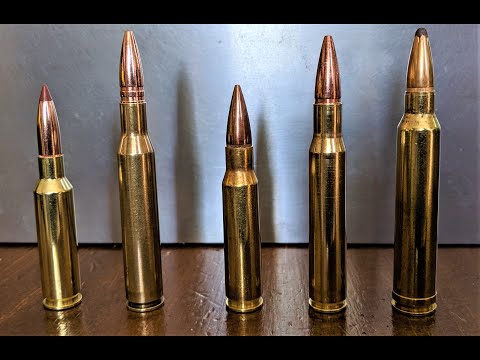
- Longer, heavier bullets require a faster spin to fight gyroscopic precession.
- Shorter, lighter bullets need less spin, so a slower twist works perfectly.
- Matching the twist to the bullet’s length, not just weight, is the real key.
The rifle’s twist rate is a physical law, not a preference—you can’t argue with the rifling. Stick to the intended range, .32 ACP Ammo for Sale and your groups will shrink dramatically.
The Practical Effect of Barrel Length on Muzzle Velocity and Accuracy
Longer barrels allow more complete powder burn, extracting greater muzzle velocity from rifle ammo—typically 20–30 fps per inch in rifle cartridges—until pressure drops diminish returns. A shorter barrel sacrifices speed but enhances maneuverability and often tightens groups if the load’s twist rate matches the bullet’s stability at lower velocities. Conversely, a fast twist paired with a short barrel can over-stabilize weak-jacketed bullets, causing fragmentation at reduced impact speeds. Accuracy depends less on barrel length alone and more on whether your chosen load maintains supersonic flight and consistent spin across the barrel’s dwell time. Velocity loss from cutting a barrel is linear but accuracy shifts are load-specific, so chronographing each candidate round is essential. Match your barrel’s length to a load that retains enough speed for reliable expansion and predictable trajectory.
Barrel length directly dictates velocity ceiling and bullet stability window; shorter barrels 6.5x57R Ammo for Sale demand carefully selected loads to preserve accuracy and terminal performance.
Full Metal Jacket vs. Hollow Point vs. Soft Point: Choosing the Right Tip for the Job
For rifle ammo, **choosing the right tip** hinges on target behavior and barrier penetration. Full metal jacket (FMJ) rounds feature a lead core fully encased in copper, offering deep, straight-line penetration through light cover and consistent feeding in semi-automatics, but they create minimal wound channels and pose a ricochet risk. Hollow point (HP) rifle bullets expand rapidly upon impact, dumping energy quickly and limiting over-penetration, making them ideal for varmint control or defensive use where backdrop safety is critical; however, HP’s fragile tips can clog with denim or heavy brush, causing failure. Soft point (SP) ammunition balances these traits, with an exposed lead tip that mushrooms at moderate velocities—more reliably than HP through fabric—while still retaining enough mass for deep penetration on medium game. This makes soft points the versatile pick for hunting in varied conditions.
Which Bullet Type is Best for Target Shooting, Hunting, or Home Defense
For target shooting, **full metal jacket rounds are the best choice** because their copper coating prevents barrel fouling and delivers consistent, cost-effective accuracy downrange. Hunting demands a bullet that expands on impact, making soft points ideal for medium-to-large game, as they offer deep penetration and a reliable wound channel. Home defense, however, prioritizes stopping power and minimal over-penetration, which favors hollow points; their rapid expansion dumps energy into the threat while reducing risk to bystanders in a home environment. Shot placement remains the ultimate deciding factor, but matching the bullet’s terminal behavior to the task gives you a decisive edge. Q: What is the most versatile load for both hunting and defense? A: A controlled-expansion hollow point, as it bridges reliable expansion with adequate penetration.

How Expansion and Penetration Differ Between Varmint, Whitetail, and Large Game Loads
Varmint loads prioritize violent, immediate expansion and minimal penetration, using fragile bullets that fragment on impact to avoid pelt damage and ricochet risk. Whitetail ammunition strikes a balance, with controlled expansion that roughly doubles bullet diameter while retaining enough weight to penetrate ribs and vitals, typically achieving 12–18 inches of travel. Large game loads demand deep, straight-line penetration, using bonded or partitioned cores that expand moderately but maintain 60–70% weight retention, allowing them to break heavy bone and reach vital organs on elk or moose. Thus, expansion and penetration differentials dictate bullet construction, from thin-jacketed varmint tips to reinforced, heavy-for-caliber large-game projectiles.
Selecting Between Brass, Steel, and Polymer-Coated Casings for Your Ammo
For rifle ammo, brass casings remain the gold standard for precision and reloadability, offering superior neck tension and consistent chamber sealing. Steel is your budget-friendly field choice, but expect shorter case life and increased bolt friction, especially in semi-auto platforms. Polymer-coated steel bridges the gap: the coating reduces drag during cycling and mitigates corrosion, yet it still lacks brass’s malleability for tight-chambered bolt guns. If you push accuracy or handload, brass casings justify their cost. For high-volume blasting or harsh conditions, polymer-coated casings deliver reliable function without the premium price. Never use steel in a rifle with a tight match chamber—it can stick on extraction, whereas brass expands and releases cleanly. Match the casing to the 6.5×55 Swedish Ammo for Sale rifle’s intended role: brass for precision, coated steel for durability on a budget.
Why Brass Feeds, Extracts, and Reloads Best but Costs More
Brass casings excel in feeding, extraction, and reloading due to their unique material properties. Its malleability allows for a precise, spring-like seal against the chamber wall during firing, which ensures reliable extraction even under high pressure. This same ductility means the case mouth and body withstand repeated resizing and bullet seating without cracking, making brass the only practical choice for handloaders. However, this performance comes at a higher price because brass requires more complex alloying, drawing, and annealing steps than steel or polymer-coated alternatives. The cost is further increased by the need for stricter quality control to maintain uniform wall thickness and hardness, which directly impacts consistency in feeding from the magazine.
- Superior chamber seal prevents carbon fouling that can cause sticky extraction.
- Annealed necks resist work-hardening, preserving neck tension for accurate reloads.
- Tight dimensional tolerances reduce feed ramp 6.8 SPC Ammo for Sale friction and rim damage.
- Upfront price is 2–3x higher than steel due to multi-stage manufacturing.

When Steel-Cased Rounds Make Sense for Budget Practice Without Sacrificing Reliability

For high-volume rifle training, steel-cased rounds make sense when your firearm features a chrome-lined or nitrided chamber and extractor, as these hard surfaces resist the increased friction from lacquered or polymer-coated steel. To avoid reliability issues, stick to quality import loads with sealed primers and consistent neck tension, and never run them in tight-match chambers or suppressors where carbon .35 Remington Ammo for Sale locking becomes likely. Cleaning after each session prevents lacquer buildup in the chamber throat, which is the primary cause of stuck cases. When your goal is cheap, repetitive trigger time at 100–300 yards, steel-case budget practice reliability holds up fine in AR-15s and AK-pattern rifles with adjustable gas systems, provided you lubricate the bolt carrier group generously.
Reading Ballistics Tables: Drop, Drift, and Energy at Different Yardages
Reading a ballistics table for rifle ammo means decoding three interdependent columns: drop, drift, and energy. Drop, typically in MOA or inches, assumes a specific zero—often 100 or 200 yards—so adjust for your actual sight height and zero distance, not the table’s. Drift is wind’s effect at each yardage, but tables list a fixed 10 mph full-value wind; for a 5 mph quartering breeze, halve it and use 70% of the value. Energy, in foot-pounds, tells you retained killing power, but it does not predict trajectory—a flat-shooting round can still lose energy fast. Cross-reference drop and drift at your target distance before shooting, because a long-range hit hinges on both, not just bullet speed. Remember that a table’s “maximum point-blank range” is far more useful than a single drop number for field shots. For subsonic rifle ammo, expect drift to balloon beyond 200 yards, so favor energy and drop data over advertised BC. Always verify the table’s altitude and temperature baseline, since dense air alters both drift and drop more than you’d think.
How to Zero Your Scope Using Your Ammo’s Specific Bullet Drop Compensation (BDC) Data
To leverage your ammo’s BDC reticle data, first confirm your optic’s reference yardage matches your cartridge’s listed velocity; otherwise, your drops will misalign. Set a target at that exact distance, fire a three-round group, and adjust windage/elevation until the point of impact sits dead-center on the primary aiming dot. Next, verify each subsequent BDC hold—typically 300, 400, and 500 yards—by shooting at those ranges and logging any consistent shift. If your hits land high or low, note the offset (e.g., “2 MOA low at 500”) and compensate by zeroing 10 Ammunition for Sale yards closer or farther to “true” the curve. Finally, transcribe your real-world corrections onto a dope card for instant field reference.
The Difference Between Muzzle Energy and Terminal Performance for Ethical Shots
Muzzle energy, often the headline number on a ballistics table, only describes the kinetic potential at the barrel’s exit. It fails to predict whether a bullet will expand, penetrate, and transfer that energy into vital tissue on a live animal. Terminal performance hinges on bullet construction and impact velocity, not just foot-pounds. A high-energy round that fragments too early may cause a shallow wound, while a lower-energy load with a bonded core can punch through bone and deliver a reliable, ethical kill. What kills humanely is not how hard the bullet hits the air at the muzzle, but how consistently it performs at the actual strike range. Therefore, when comparing loads, always check retained energy at your maximum shooting distance, not the advertised peak, to ensure adequate penetration and expansion for your chosen game.
Storing, Inspecting, and Handling Your Cartridges for Long-Term Reliability
For long-term rifle ammo reliability, store loaded cartridges in a sealed, airtight container with a desiccant pack, at a stable temperature below 75°F, and always place them bullet-up to prevent powder shift and primer compression. Inspect each round before use: look for corroded brass, loose or deeply set primers, and any bullet setback from repeated chambering—crimp issues here cause pressure spikes. Handle cartridges by the case body, never the bullet tip, and avoid oily fingers, which contaminate powder through the primer flash hole over time. Rotate your stored stock annually, firing the oldest first, because even pristine ammunition degrades through propellant stabilizer breakdown, though this is rarely a safety issue in decent storage. Finally, wipe down boxes with a dry cloth after any humid range session, and never store ammo in direct contact with leather or bare metal—both wick moisture. Consistency in your inspection routine is the single most reliable safeguard against a dead round at the worst moment.
How to Spot Corrosion, Dents, or Primer Issues Before They Cause a Misfire
Give your rifle ammo a quick visual once-over before loading, especially after storage. Check the case body and neck for corrosion before it causes a misfire—look for dull green or white patches, pitting, or any fuzzy discoloration that isn’t normal tarnish. Run your thumb over the brass; a rough or sticky spot means oxidation is eating in. For dents, hold the cartridge under a bright light and rotate it, watching for dimples or creases, particularly near the shoulder or mouth—these can pinch the bullet or fail to chamber fully. Finally, inspect the primer: it should sit flush or slightly recessed, never pierced, cracked, or showing a dark ring of soot. If you see any of these flaws, set that round aside for practice and don’t chamber it.
Spot corrosion as dull spots or pitting, dents as dimples under light, and primer cracks or proud seating—then discard those rounds immediately to prevent a misfire.
Optimal Temperature and Humidity Conditions to Keep Powder Fresh and Bullets Seated Tight
Keep your rifle ammo in a stable, cool environment—ideally between 55°F and 75°F—to prevent temperature swings that stress powder granules and weaken case necks. Humidity matters more: aim for **30–40% relative humidity** to keep powder fresh and bullets seated tight. Below 20%, primers and propellant can dry out, risking inconsistent ignition; above 50%, moisture corrodes brass and degrades the bullet-to-case seal, allowing bullets to walk under recoil. Seasonal basements and garages often fail this test, so use a sealed ammo can with desiccant and a hygrometer.
Q: What humidity level keeps .32 Win Special Ammo for Sale powder fresh and bullets seated tight for long-term rifle ammo storage?
A: Keep it at 30–40% RH—low enough to avoid corrosion, high enough to .338 Lapua Ammo for Sale preserve propellant chemistry and neck tension.
